Conference Opening- Tuesday 17 Nov (0900-0930 AEST)*
*all times are AEST (QLD time)
Acknowledgement of Country–
Greg Pratt, Central Queensland University
Dr Lindsey Te Ata o Tu McDonald, University of Canterbury
Dr Harisan Unair, National University of Singapore

Greg is a descendant of the Quandamooka people of Moreton Bay, and grew up with the Ghughu Yalanghi people of Cape York. He has extensive experience as an Aboriginal mental health practitioner and has worked in policy, research and health services. Over the past 3 years, Greg has led more than 80 community engagements across Queensland. He is passionate about and committed to supporting the research sector to realise its responsibility to benefit and empower Aboriginal and Torres Strait sovereignty, equity and equitable access to health and health research

Lindsey Te Ata o Tū MacDonald (Kai Tahū) is a senior lecturer in political philosophy and a research associate of the Ngāi Tahu Research Centre at the University of Canterbury. He is also co-chair of the Aotearoa Research Ethics Trust, and founded the Independent human research ethics collective, which provides paid research ethics review for government and commercial researchers. His blog posts on research ethics can be found at https://www.ihrec.co.nz/blog
Conference Opening– Dr Lorraine Finlay, Australian Human Rights Commissioner

Dr Lorraine Finlay is the Human Rights Commissioner at the Australian Human Rights Commission. In this role Lorraine leads the work of the Commission in areas including modern slavery, asylum seekers and refugees, business & human rights, and technology & human rights.
Prior to joining the Commission, Lorraine has worked as a lawyer and academic specializing in human rights and public law. Lorraine holds a PhD in Law from the University of Queensland, and a dual Masters in Law from New York University and the National University of Singapore, where she studied as a Singapura Scholar. Her past roles have included working as the Senior Human Trafficking Specialist with the Australian Mission to ASEAN, an academic at Murdoch University, and a State Prosecutor with the WA DPP.
Keynote Speakers
Keynote Address1- 17 November 2026 (0930-1030 AEST)
A/Prof Robyn Whittaker– National Institute for Health Innovation, University of Auckland,
AI Governance and Ethics in Health New Zealand

Robyn is a Public Health Physician currently leading the innovation stream within a newly established Institute for Innovation and Improvement at Waitemata District Health Board. She leads the Leapfrog Programme of enterprise wide strategic projects, partnerships with industry and academic institutions (such as the Precision Driven Health research partnership), and a Centre for Health IT & Creative Design that works with DHB staff to develop and trial new things.
Robyn is also an Associate Professor at the National Institute for Health Innovation, University of Auckland, where she co-leads the Health Informatics and Technology research team. Her research interests are in mHealth (mobile health) – particularly designing and trialling interventions to be delivered to people via their mobile phones.
Keynote Address 2- Wed 18 November 2026 (0900-1000 AEST)
Ms Elizabeth Tydd– Australian Information Commissioner
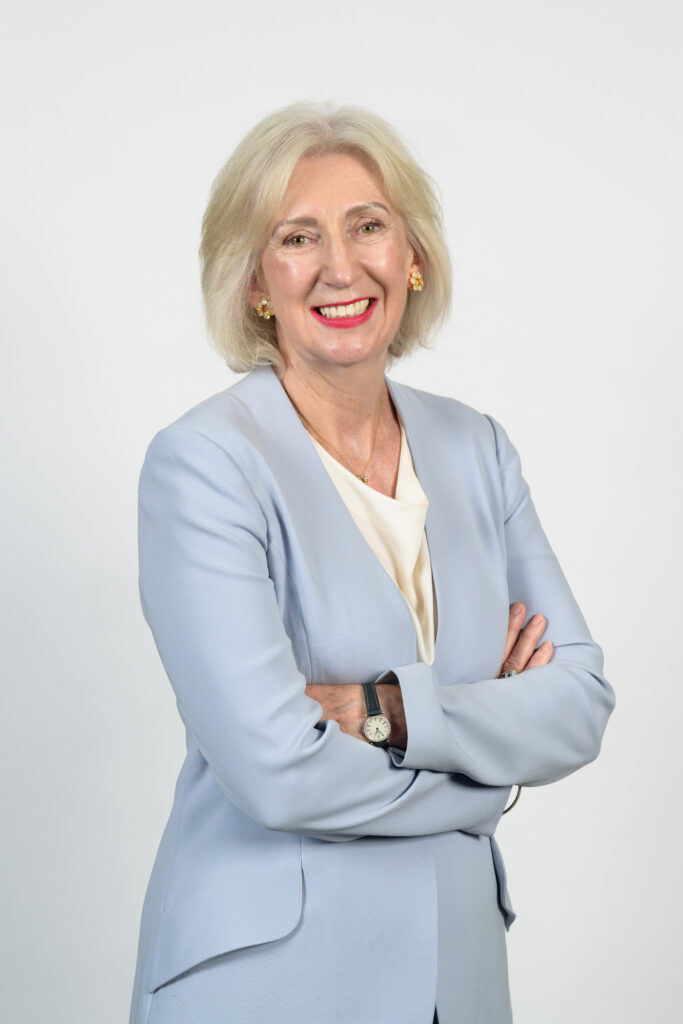
Elizabeth took up the position of Australian Information Commissioner in August 2024 for a 5-year term. She is an experienced agency head and has occupied a number of statutory decision‑making roles, including Information Commissioner and CEO of the NSW Information and Privacy Commission, Australian Freedom of Information Commissioner, Deputy President of the Workers Compensation Commission and Deputy Chairperson of the former Consumer, Trader and Tenancy Tribunal.
Elizabeth has extensive regulatory and governance experience at an executive and board level in a range of jurisdictions and industries, including commercial, not-for-profit and public sector oversight.
She holds a Bachelor of Laws and Master of Laws from the University of Technology Sydney, as well as postgraduate certificates in executive management and governance together with post graduate qualifications in leadership and policy from Harvard University. Elizabeth possesses expertise in digital government and has written extensively on this subject.
Keynote Address 3- Thurs 19 November 2026 (0800-0900 AEST)
A/Prof Kalinda Griffiths– Director of Poche Centre SA+NT at Flinders University-
Collecting Indigenous Data in Clinical Trials

Associate Professor Kalinda Griffiths (FRSN) is a Yawuru woman living and working on Larrakia Country. She is the Director of Poche SA+NT, a Matthew Flinders Fellow and an NHMRC Emerging Leadership Fellow at Flinders University, and a Visiting Senior Fellow at the Centre for Big Data Research in Health at UNSW.
Kalinda is an epidemiologist who has worked across the research sector for more than 25 years. Her research focuses on empirically addressing complex health disparities through existing data, with particular attention to the quality, utility and governance of data pertaining to Aboriginal and Torres Strait Islander peoples.
Her areas of focus include Indigenous Data Governance, the measurement of health disparities, cancer, and genomics. Her work seeks to strengthen the quality and use of Indigenous population-level data and support data systems that are culturally grounded, ethical, and responsive to the priorities of Aboriginal and Torres Strait Islander peoples.
Session speakers
Day 1 Wed 17 November 2026
Session 1- Use of AI in Research (10:45-12:00pm AEST)
Dr Timothy Guetterman PhD, Department of Family Medicine, University of Michigan, Ann Arbor, Michigan email:tguetter@med.umich.edu
Ethical considerations for the use of artificial intelligence in qualitative research (see https://doi.org/10.1016/j.metip.2026.100266)

Tim is an applied research methodologist who specialized in general research design and mixed methods research at the University of Michigan. His methodological interest is to advance rigorous methods of quantitative, qualitative, and mixed methods research, particularly strategies for intersecting and integrating qualitative and quantitative research. He also conducts NIH-funded health services research with a particular focus on improving health services using informatics technology. He has extensive professional experience conducting program evaluation with a focus on educational and healthcare programs. He serves as Co-Editor in Chief for the Journal of Mixed Methods Research.
Tim will review key ethical questions for ethics board reviewers and researchers in the use of artificial intelligence across the process of qualitative research. The presentation will emphasize knowing the type of how artificial intelligence is being used to understand potential risks.
Adjunct A/Prof Carolyn Heward, Lecturer, Clinical Psychology, James Cook University, Townsville
Protecting Participants and the Scholarly Record: Lessons from Military Research and a Case of Suspected AI Plagiarism.

Carolyn Heward is a senior lecturer in the Master of Psychology (Clinical) program at James Cook University.With extensive experience as a Clinical Psychologist within the Department of Defence and as a contracted health provider to the Australian Defence Force (ADF), Carolyn brings unique insights to the intersection of military culture and mental health. Her research focuses on military identity construction and its implications for psychological well-being among service members. This work is particularly relevant given current national discussions around veteran mental health and military culture reform.
As a qualitative researcher, Carolyn’s doctoral research explores the nuanced ways Defence personnel construct and maintain their military identity within the Australian context.
Annette Horton, Central Queensland Health-
When Is Enough, Enough? AI Research Planning and Ethical Review

Artificial intelligence (AI) is increasingly being used across research, but determining what constitutes responsible use is not always straightforward. Guidance is emerging for researchers, institutions and Human Research Ethics Committees (HRECs), including the NHMRC distinction between routine and non-routine AI use. Yet guidance still requires interpretation and judgement.
This presentation uses my planned Classic Grounded Theory doctoral study as a single case. CQUniversity guidance for responsible AI use in graduate research informed the development of a study-specific protocol that establishes boundaries around generative AI engagement, transparency, documentation, researcher responsibility and governance.
I then change hats. As the researcher, I consider whether the protocol gives me enough information to plan and govern my AI use and meet institutional and academic expectations. As a HREC reviewer, I work through each question in the NHMRC guide, looking beyond the wording to consider the underlying ethical issues, risks and challenges. I ask whether the information provided is enough to make an informed ethical judgement, while also considering how reviewer knowledge, assumptions and potential bias may influence that judgement and what strategies might reduce these risks.
Session 2- AI in Ethics Review (1315-1430)
Jiehao (Joel) Seah– Centre for Biomedical Ethics, National University of Singapore
Chat IRB for ethics committees-the ethical imperative

Joel is a PhD student at the Centre for Biomedical Ethics, NUS, and holds a BSc in Biological Sciences. A former Human Research Protection Programme (HRPP) professional, he has held roles as an analyst and manager at the Institutional Review Boards (IRBs) of National Healthcare Group, Singapore Management University, and Nanyang Technological University.
He is a member of the Consortium to Advance Effective Research Ethics Oversight (AEREO) which seeks to improve HRPP/IRB effectiveness, and on the advisory board for the Human Research Protections Clubhouse (hosted by SUNY Downstate) – a platform for networking & empowering HRPP/IRB professionals at all levels across the human research enterprise.
Joel’s current interests lie in AI, data, and research ethics, and AI-human interactions. His PhD thesis focuses on the role of Generative AI/Large Language Models (GenAI/LLMs) in the IRB’s functions and operations.
Dr Lisa Marlow, Southern Cross University- AI agents in Ethics application triaging

Southern Cross University has trialled an AI-supported triage process within its human research ethics application pathway since March 2026. The process uses generative AI to help identify missing information, inconsistencies and matters that may require clarification before an application proceeds to ethical review. Ethics Office staff use the AI-supported output to provide tailored, responsive and early support, helping research teams clearly articulate the ethical dimensions of their projects and address avoidable errors or omissions before review. This allows committee members to focus their attention on the substantive ethical issues raised by the proposed research. Ethical review and decision-making remain the responsibility of the University’s ethics committee members. This presentation outlines the rationale, development and implementation of the trial, together with the practical opportunities and challenges encountered.
Professor Peggy Kern, Faculty of Education, University of Melbourne- Using LLMs to analyse qualitative research data: An ethics case study and a comparison of methods

Large language models (LLMs) are increasingly being incorporated into qualitative research, often faster than established human research ethics processes have adapted. This presentation uses our experience comparing manual, hybrid human–AI, and LLM-assisted analysis of short-response survey data to explore implications of generative AI use in qualitative analysis for research ethics review.
In our study, the ethical issues raised extended beyond data security and privacy. When participant responses are processed by an LLM, HRECs must also consider whether existing participant consent adequately encompasses AI-assisted analysis; who remains accountable for interpretation; threats to integrity of the findings; and whether the pathway from source data to reported finding remains sufficiently auditable.
The findings suggest that HRECs should consider the conditions under which it’s methodologically and ethically defensible to use generative AI for qualitative analysis. We propose five questions for review. For qualitative research in particular, meaningful human oversight remains both a methodological safeguard and an ethical responsibility.
Session 3 – Data, Biospecimens and Privacy in Research (1445-1600)
Dr Lara Harvey Neuroscience Research Australia, and Centre for Big Data Research, University of New South Wales
From eMR to Research-ready Registries: Balancing Innovation, Privacy and Research Value

Dr Lara Harvey is a Senior Research Fellow in the Falls, Balance and Injury Research Centre at Neuroscience Research Australia and a Conjoint Senior Lecturer in the School of Population Health, UNSW.
Lara is an epidemiologist with interest and expertise in epidemiological methods, the analysis of large population-based administrative datasets including linked data, health economic evaluation and survey methodology. Her research areas of interest include population-based trends in injury, health service research and the evaluation of health care policies and health and safety-related regulations/legislation.
Lara currently leads the large NHMRC-funded national data linkage study which aims to improve care and outcomes for older people who sustain a hip fracture and the TRIPP-funded Surgical Care of Older People (SCOPE) study. She is the recipient of multiple awards including a Baxter Health Award and a NSW Premiers Public Health Sector, Gold Medal for implementation of the NSW State Wide Infant Hearing Screening program (SWISH).
Lara is currently Deputy Chair of the NSW Population and Health Service Research Ethics Committee, and Co-Chair of the SPH Ageing Research Network, UNSW
Sonja Read, Partner, Minter Ellison, Brisbane, legal member, Bellberry HREC
How Updates to Commonwealth Privacy legislation, and recent caselaw will change the role of HRECs that approve the use of personal information

Sonja is a health regulatory lawyer working with a wide range of clients in the healthcare and medical research sectors throughout Australia. She has a particular interest in bioethics and emerging legal issues. She advises on compliance with a wide range of legislative requirements, public health funding arrangements, privacy and regulation of data, managing data breaches, medical and health technology and devices, and medical research agreements.
In addition to her diverse practical experience, she has a Master of Laws from the University of Pennsylvania in the US, specialising in health law, policy and bioethics. She is a legal member of the Bellberry HRECs.
Dr Annalee Stearne, Curtin University Australia
Ms Louise Lyons, Australian Alliance for Indigenous Genomics and Kids Research Institute Australia
Cultural considerations in research and review- collection and governance of Indigenous Data and Data sovereignty

Annalee Stearne, a Wardandi-Nyoongar woman living on Whadjuk Nyoongar country (Perth, Western Australia). Annalee has a background in education and public health research focusing on Aboriginal-led alcohol and other drug interventions and related policy issues. She has also worked and lived in the Northern Territory and Western Australia. She has extensive experience in both the tertiary research sector as a researcher, as well as with Aboriginal community-controlled organisations. In August 2022, she completed her doctoral studies examining how First Nation Australians’ right to self-determination can be exercised in alcohol policy development. She serves on the Curtin University Human Research Ethics Committee, as well as several advisory committees and boards. Annalee has a passion for ensuring Indigenous Australian leadership in the efforts towards improving their health and wellbeing.

Louise Lyons is a proud Jaadwa woman from Western Victoria. Louise has held senior research, strategic, general, project and business management roles in the private and public hospitals/healthcare sectors, Aboriginal health, local government and government owned entities. She held the Director of Public Health and Research at the Victorian Aboriginal Community Controlled Health Organisation for nearly 6 years – and developed health programs and research projects in partnership with Aboriginal health services and Communities across Victoria. She has been a member of numerous state and Federal government working and advisory committees for Aboriginal health policy and programs planning. Her strengths are translating research knowledge into culturally appropriate practices and models of care, policy development, Indigenous data sovereignty and governance, Community engagement and facilitation, strategic planning, culturally relevant evaluation and impact modelling and advocacy.
Day 2 Wed 18 November 2026
Session 4- Maintaining Quality in Ethics Review (10:30-12:00pm AEST)
A/Prof Emma Tumilty PhD, First Nations Health Unit · Royal Melbourne Hospital/ Deakin University
New International Ethical Guidance For Research Involving Deceased Donation and Transplantation Activity (INTEGRITY)

Emma Tumilty is a bioethicist with a health service background who works in Indigenous Health Practice, Education and Research within the First Nations Health Unit of the Royal Melbourne Hospital. An Honoary Associate Professor at Deakin University, Emma was previously a Graduate Program Director in the Department of Bioethics and Health Humnainites at the University of Texas Medical Branch (UTMB) in Galveston where she also worked as a clinical ethics consultant in the UTMB Health system and a research ethics consultant in the Institute of Translational Science.
Emma will talk about an international multi-stakeholder group compromised of clinicians, researchers, bioethicists, organ and tissue banking professionals, patient representatives and policy-makers supported by the European Society for Organ Transplantation (ESOT), International Society for Organ Donation Professionals (ISODP), and The Transplantation Society (TTS) who undertook a series of workshops and consultations to develop and refine a set of guidelines for research involving deceased donation of organs, cells, and tissues.
After discussing the process for the guideline creation, she will discuss each of the principles and their salience in an Australian setting, before outlining the next steps of the INTEGRITY group around the guideline implementation and adaptation to various settings.
Dr Bec Jenkinson, Senior Research Fellow, Consumer and Community Involvement in Clinical Trials , University of Queensland
Research Priority Setting Is Not Research: A Call for Ethical Clarity in Australia

Khushboo Khatri, Research Quality Improvement Manager, Monash Health
Separate but Together: Aligning HREC Compliance with the National Clinical Trials Governance Framework

The National Clinical Trials Governance Framework has expanded expectations of research compliance beyond ethics approval to include organisational assurance, risk management, and ongoing oversight. At the same time, the National Statement on Ethical Conduct in Human Research recognises that responsibility for ethical research extends beyond HRECs to researchers, governance offices and institutions. Together, these frameworks highlight an important distinction: ethics approval confirms that a study may commence, but it does not in itself provide assurance that research remains ethical, safe, and compliant throughout its lifecycle. We wished to explore how responsibilities for ongoing research compliance are shared across HRECs, Research Governance Offices and institutions, and identify opportunities for integrated oversight that strengthens organisational assurance while minimising duplication, particularly in emerging areas such as artificial intelligence and GMO research. Using practical examples and quality improvement principles, this presentation examines common compliance gaps that arise after ethics approval, including overdue reporting, protocol deviations, investigator changes, and emerging technology-related risks. It explores where ethics and governance responsibilities intersect, and how risk-based monitoring, trend analysis and continuous improvement can strengthen oversight across the research lifecycle.
Heidi Gaulke – Austin Health; Honorary Appointee, Safer Care Victoria, Victorian Department of Health.
Quality in Ethics Review & Oversight of Research: Monitoring, Reporting, Guidelines and Regulations

As Australian Human Research Ethics Committees (HRECs) prepare for emerging accreditation requirements, questions remain regarding the systems, resources and governance arrangements needed to support consistent, high-quality ethical review. The Strategic Ethics Reform Project, led by Safer Care Victoria, was undertaken to assess Victoria’s readiness for accreditation. Early consultation identified concerns with the broader factors impacting quality and sustainability of research ethics oversight.
Between March and June 2026, Safer Care Victoria undertook a rigorous listening program involving 259 survey responses, a targeted ethics and governance resourcing survey (24 responses), 17 focus groups and roundtables, seven written submissions, and interviews with five senior system leaders. Findings were tested with multiple engagement methods to identify consistent, sector-wide challenges.
The findings position accreditation as an opportunity to strengthen not only HREC processes but the broader systems that underpin ethical review. Effective ethical reform requires a system-wide approach that supports participant and community protection, workforce sustainability, research governance, quality assurance, and organisational accountability. These insights may inform future reform and quality improvement efforts across Australia
Session 5- Participant-focussed research and review(12:30-13:45 AEST)
Professor Huia Jahnke PhD, (Ngāti Kahungunu, Ngāti Toa Rangātira, Ngai Tahu, Ngāti Hine) Professor of Maori and Indigenous Education, Massey University, New Zealand
Cultural Considerations in Researching involving Maori

Professor Huia Tomlins Jahnke is Professor of Māori and Indigenous Education at Massey University and an internationally recognised scholar in kaupapa Māori research, Indigenous methodologies, and research ethics. Her research has focused on advancing ethical approaches to research involving Māori communities, with particular emphasis on Te Tiriti o Waitangi, Indigenous self-determination, relational accountability, and the protection and advancement of Māori knowledge.
Professor Jahnke has played a significant role in shaping ethical research practice in Aotearoa New Zealand. She served two terms on the Massey University Human Ethics Committee, including one term as Deputy Chair, where she contributed to the development of ethics policies and processes that better reflected Māori perspectives and Te Tiriti o Waitangi obligations. Her expertise has also informed national ethical review processes through service on the New Zealand Health Research Council Ethics Committee, the Ethics Committee on Assisted Reproductive Technology, the Bioethics Council, and the Social and Human Sciences Sub-Commission of the New Zealand National Commission for UNESCO.
She is currently Co-Chair and Trustee of the Aotearoa Research Ethics Trust.
Lisa Curry, Aboriginal Health Research Manager Clinical Trials, Murrumbidgee Local Health District
Patrick Sagigi, Aboriginal Wellness Centre, Murrumbidgee Local Health District
Kath Irish, Manager Clinical Trials, New South Wales Office for Health and Medical Research
Engagement of Aboriginal Communities in clinical trials and other research

Lisa Curry-Lawlor, is a proud Wiradjuri woman and Aboriginal Health Research Manager in the Murrumbidgee Local Health District (MLHD). She helps communities understand clinical trials and the importance of Aboriginal participation to help shape health outcomes. Lisa addresses these concerns through honest conversations, explaining clinical trials in plain language and reassuring people that participation is voluntary, informed consent is required, and participants can withdraw at any time.

Patrick Sagigi is a proud Waikad man from the Western Torres Strait Islands, living and working on Wiradjuri Country. He is an Aboriginal Healthcare worker and health advocate operating in the Riverina and Murrumbidgee regions of NSW and is passionate about improving health outcomes for Aboriginal and Torres Strait Islander peoples. he believes that meaningful change is achieved through influencing systems, strengthening cultural safety and empowering communities.
He is widely recognized for his community outreach efforts and his leadership in improving local healthcare infrastructure. He has served as a dedicated Aboriginal Health Worker performing chronic care outreach into the community through the Riverina Medical and Dental Aboriginal Corporation (RivMed) and is a key committee member of the working group focused on establishing a dedicated Men’s Wellness Centre in Wagga Wagga.

Kath leads clinical trials NSW directing initiatives that strengthen clinical trial quality and improve clinical and corporate outcomes for all communities by creating sustainable and equitable healthcare through system-level reform.
A/Prof Sarah Wallace, University of Queensland, Queensland Aphasia Research Centre
Accessible by Design: Consumer Co-design and Person-Centred Information in Aphasia Research

Sarah is an NHMRC Emerging Leadership Fellow and Certified Practising Speech Pathologist, who leads a transdisciplinary team of more than 20 researchers at the University of Queensland. Her research themes include: Design and implementation of a national audit system to drive quality improvement in post-stroke aphasia services.
Drawing on a program of co-designed research at the Queensland Aphasia Research Centre, this presentation explores what accessible, person-centred research documents look like in practice and how they are made. For people with aphasia, a language disorder commonly acquired after stroke, standard written information routinely creates barriers that can undermine informed consent before research has even begun. Using examples from across a portfolio of MRFF-funded aphasia studies, this presentation will describe how people with aphasia are embedded as co-designers in developing the tools that support meaningful decision-making about research participation, from plain language drafting and visual design through to accessible research dissemination via tools like the Aphasia Research Library (The Aphasia Research Library). For HREC members, the presentation offers practical suggestions for reviewing applications involving participants with communication disability. Attendees will leave with concrete examples and a sharper sense of what to ask when inclusive participation is both an ethical obligation and a design challenge.
Session 6: Session 6- Consent- evolution and validity (Wed 18 Nov 1500-1615)
Charlotte Vivian, Australian Human Microbiome Biobank (AHMB) Coordinator, Queensland University of Technology, Brisbane, Australia.
Broad Consent in Practice: Operational Lessons from the Australian Human Microbiome Biobank

Biobank consent presents a distinct challenge for Human Research Ethics Committees (HRECs): participants provide consent once, at a single point in time, for indefinite storage and future research that cannot be fully specified in advance. The Australian Human Microbiome Biobank (AHMB), approved by the Queensland University of Technology Human Research Ethics Committee, provides a practical case study of how governance structures can support broad consent throughout the lifetime of a biobank.
Unlike many traditional biobanks, microbiome collections contain both primary human biological material and cultured microbial isolates, each requiring different governance considerations. AHMB’s consent framework distinguishes between these categories under a single ethics approval: primary human samples remain restricted to re-isolation, while derived microbial isolates may be distributed to researchers and commercial organisations for research and, where appropriate, commercial development. This supports broad downstream use while maintaining a clear ethical boundary around identifiable human material.
Using AHMB as a case study, this presentation demonstrates how consent, governance, withdrawal processes and access controls can be integrated into a practical framework for long-term microbiome biobanking, providing insights that may inform the design and evaluation of consent processes for other long-term biological collections.
Professor Emerita Susan Dodds, La Trobe University, VIC
Enabling responsible registration and ethical consent governance of Australian stem cell lines

Pluripotent stem cells are important research tools to study disease mechanisms and potential therapies. However, the conditions under which human stem cell lines can be used is not always clear and researchers face ethical and practical constraints including unclarity about whether cell donors’ consent extends to the new research.
Existing research ethics protocols emphasise specific consent and the duty of researchers to protect participants’ confidentiality. Alternatives such as ‘open consent’ may not appropriately address rapid advances in stem cell research. Nor is re-consent necessarily warranted or feasible when involving enduring cell lines.
Through our MRFF Project, “Registration and ethical governance of Australian stem cell lines”, we will develop digital infrastructure for trustworthy, responsible, and effective governance of biospecimens, piloting new mechanisms for review of consent in the Australian stem cell registry. This presentation builds on findings from an earlier project [https://www.eoar.com.au/ ] to discuss the challenges the enduring cells lines pose for research ethics review and will explore both ‘dynamic consent’ (Hass et al 2021) and ‘consent to governance’ models (including ongoing community engagement), as having potential value in determining how stored cell lines may be used in research.
Dr Devaki Monani, Senior Lecturer, Faculty of Social Science, Charles Darwin University, Darwin, NT
Ethical Considerations when researching Multicultural groups

Dr Devaki Monani is a fluent speaker of four Indian languages. Devaki is an adjunct fellow with the Sir Zelman Cowen Legal Centre, Victoria University and has completed an Honorary Visiting Fellowship with Anti-Slavery Australia, University of Technology Sydney. Devaki’s current Research includes Multicultural Gambling, Settlement of Migrant Communities in the Northern Territory, and Multicultural Women’s Rights. She currently has 2 ARC Linkage Grants.
Devaki will discuss the methods and engagement techniques that she uses to engage and seek consent from multicultural groups to participate in qualitative research projects.
Day 3 Thurs 19 November 2026
Session 8- Legislation, Regulation and factors affecting HRECs (Thurs 19 Nov 1415-1530)
A/Prof Stephen Adelstein, Chairperson, Australian Health Ethics Committee
How AHEC is supporting HRECs

Stephen Adelstein is a Clinical Immunologist and Allergist and an immunopathologist at the Royal Prince Alfred Hospital, Sydney where he also undertakes research in the development of novel tests for immune-mediated disorders. He is one of the inaugural Co-Directors of Institute for Academic Medicine at the Hospital. He has served as a member of the Australian Health Ethics Committee for 6 years and has also been a Director of the Royal College of Pathologists of Australasia.
Dr Michael Swarbrick, Assistant Director, Clinical Trials Policy Section, Australian Government Department of Health, Disability and Ageing
Quality Standards and an Accreditation Scheme for HRECs and their host Institutions

In 2021, the Department of Health, Disability and Ageing, on behalf of all jurisdictions via the Inter-Governmental Policy Reform Group (IGPRG), engaged the Australian Commission on Safety and Quality in Health Care (ACSQHC) to assist them in the development of Quality Standards and an accreditation scheme for HRECs and their host Institutions.
Michael will provide an update on the development of an accreditation scheme. the delivery partner, ThinkPlaceX, will test and refine the model of the HREC accreditation scheme, and develop implementation architecture, relevant training and change management programs, and ensure integration with the proposed National One Stop Shop (NOSS), a single, national system for data and approvals.
Dr Tanya Symons, Consultant, TanyaSymonsassociates.com.au
Implementation of new contemporary ICH-GCP E6(R3) Guidelines-what it means for HRECs

Tanya has over 30 years’ experience in clinical trials. She has authored key guidelines, including the NIHR Clinical Trials Toolkit, the Australian Clinical Trials Handbook and the NHMRC’s Safety Monitoring and Reporting in Clinical Trials. She focuses on aligning trials with global best practices, embedding them into health systems, and advancing consumer involvement. Tanya will consider the implementation of the latest revision of the ICH-GCP clinical trial guidelines and what it means for HRECs.
Rob Loblay oration- Thurs 19 Nov 1315-1400
Introduced by Dr David Cook, Sydney Local Health District HREC
Prof Michael Martin– Co-HREC Chairperson, Australian National University HREC
Consent in an AI World

Michael is Professor of Statistics and Head of Statistics in the Research School of Finance, Actuarial Studies and Statistics at the Australian National University in Canberra, Australia. His teaching career includes as highlights the Dean’s Award for Distinguished Teaching, School of Humanities and Sciences at Stanford University in 1992-3, the Faculty of Economics and Commerce Award for Excellence in Teaching at the ANU in 1998, the ANU Vice-Chancellor’s Award for Excellence in Teaching in 2000, being named a finalist in the Australian Awards for University Teaching in 2000.He is Principal Fellow of the Higher Education Academy (UK),and is the co-chair of the Educational Fellowship Scheme Committee at the ANU, He is currently the co-Chair of the ANU Human Research Ethics Committee, having served as Chair of the HREC from 2015 to 2025.
Panel Sessions and Panel members
Panel Session 117 Nov 1200-1245
Maintaining Trust in Ethics Review Using AI
Moderator- Prof Michael Martin
Panel members:
Professor Emma Kowal– Deakin University
Emeritus Professor Bruce Smyth– Australian National University
Professor Erwin Loh– Monash University
This session will discuss the advent and integration of AI into all aspects of the ethics review process and consider the level of oversight and human interaction required to engender trust in the ethics review process. sandwiched between two AI sessions, it will be thought provoking and provide context for the following session dealing with AI in ethics review.
Panel Session 2 17 Nov 1600-1645
Approval of data sharing by HRECs
Moderator- Adjunct Prof Gordon McGurk
Panel members:
Professor Paula Hawtin– Bellberry HREC/Swinburne University
A/Prof Suzie Ferrie– Chairperson, Sydney LHD HREC (RPAH Zone)
Sonja Read– Partner, Minter Ellison, Brisbane
Dr Karen Crawley– Lived experience Representative
The approval for the secondary use of data by HRECs, through a waiver of consent, is a contentious issue. This is because HRECs have to make certain assumptions about whether data owners would have said no to this secondary use. This session will set the scene through the story from a lived experience consumer and then discuss the legal and ethical aspects of data sharing. It will certainly provide food for thought and will raise issues that may need to be considered in any HREC review.
Panel Session 3 18 Nov 1345-1445
Who gets to say yes? Listening for ethics (or authority) in place & people
Moderator- Dr Janelle Bowden
Panel members:
Tom Johnson (Ngāti Hauiti, Te Awa Tupua) Whakauae Research: tom@whakauae.co.nz
Sebastian J. Lowe (Tangata Tiriti) Te Whare Wānanga o Waikato (the University of Waikato): sebjlowe@gmail.com
Lauren Bedford-Rolleston (Ngāti Ranginui, Ngai te Rangi, Pirirakau)The University of Sydney and Te Whare Wānanga o Waikato (the University of Waikato) l.bedfordrolleston@gmail.com
Human research ethics committees assess consent, risk and researcher conduct, yet approval
before a project begins cannot settle every ethical question that arises through research. In
Indigenous and place-based research, participants, whānau (family/extended family), knowledge
holders and communities may hold authority over what can be asked, interpreted and shared.
Places and the more-than-human world may also shape a researcher’s responsibilities and
obligations.
Through short provocations and discussion, our panel looks at where institutional permission
meets the authority of people, knowledge holders, and place; how responsibilities that emerge in
our research relationships often challenge our research methods and ideas of consent; and who
maintains authority over interpretation and sharing after knowledge enters a thesis, archive or
publication. The panel will offer HREC members practical ways to recognise ethics approval as
conditional, ongoing, and deeply relational.
Panel Session 4 18 Nov 1345-1445
Proportionate Ethics Review within a Learning Health System– Jurisdictional perspectives
Moderator- Adjunct Prof Gordon McGurk
Panel members:
Beth Wray– Clinical Excellence Qld
Rachel Kerr– Monash University
Dr Alexandre Stephens– NSW Health
David O’Halloran– Health Tasmania
Following the 2025 HREC Conference State and Territory representatives got together to discuss closely related issues from respective jurisdictions, which prompted conversations beyond the conference and the development of an ongoing cross-jurisdictional dialogue. This panel session will share perspectives on the development and implementation of proportionate approaches to ethics and governance across research, quality improvement, innovation, evaluation, and audit.
Panel Session 5 19 Nov 1345-1445
A checklist to help HRECs review evidence from New Approach Methodologies (NAMs) for First-in-Human clinical trials
Chair –Leanne Weekes Director of Research, Policy and Advocacy, Bellberry Limited
Panel Members:
A/Prof Orin Chisholm, Program Director, pharmaceutical and Medical Device Development programs, University of Sydney
Professor Andrew McLachlan AM, Head of School and Dean of Pharmacy, University of Sydney, Bellberry HREC Chair
Professor Michael Ward, Head of Pharmacy, Adelaide University and Bellberry HREC Chair
Traditionally medical research has relied on animal studies to develop the preclinical evidence used to support ethics applications to test novel medications in humans. Increasingly, New Approach Methodologies (NAMs), including artificial intelligence, organoids, human cells and tissues are being used to develop more human-relevant models before First-in-Human (FIH) trials. While NAMs have the potential to improve the efficiency and translational value of clinical research, their incorporation into preclinical evidence packages presents challenges for HREC members who may less familiar with their strengths, limitations, and appropriate application. This year Bellberry Limited and the Australasian Society of Clinical and Experimental Pharmacologists and Toxicologists (ASCEPT) released a checklist to support HRECs in evaluating preclinical evidence generated using NAMs. The checklist provides a structured framework for assessing factors including the context of use, human relevance, technical reproducibility, and data quality. It also considers trial safeguards and assists HRECs in determining whether external expert review is needed.
Panel Session 6 19 Nov 1530-1630
HREC Chairs session – Filling the Gap in a System under Strain
Panel members:
Dr Hudson Birden, HREC Chairperson, Townsville Hospital and Health Service
A/Prof Suzie Ferrie, HREC Chairperson Sydney Local Health District (RPAH Zone)
A/Prof Mark Slee, Flinders University/Bellberry HREC Chair
Professor Dean Sutherland, HREC Chairperson, University of Canterbury, NZ
This session will consider contemporary topics that affect HRECs and how they are often used as a committee of last resort and by extension a de facto regulator, leading to a remit that is in excess of contemporary guidelines. Attendees are free to suggest topics for discussion, but some topics will include: how we engender quality in HREC review?; membership of HRECs; What support is required?; Do we and should we have a truly national approach?